The short answer
Book for people and equipment together. Give the full passenger count, describe your bags and request any child seats or accessibility arrangements explicitly. A vehicle label or a seat count alone does not confirm that your particular group and equipment will fit.
In this guide
Count every traveller
Include babies and children in the party details, then explain the seating arrangement you need. Do not plan capacity by assuming a child can travel on an adult’s lap. The appropriate restraint and its installation need to be agreed for the vehicle and passenger.
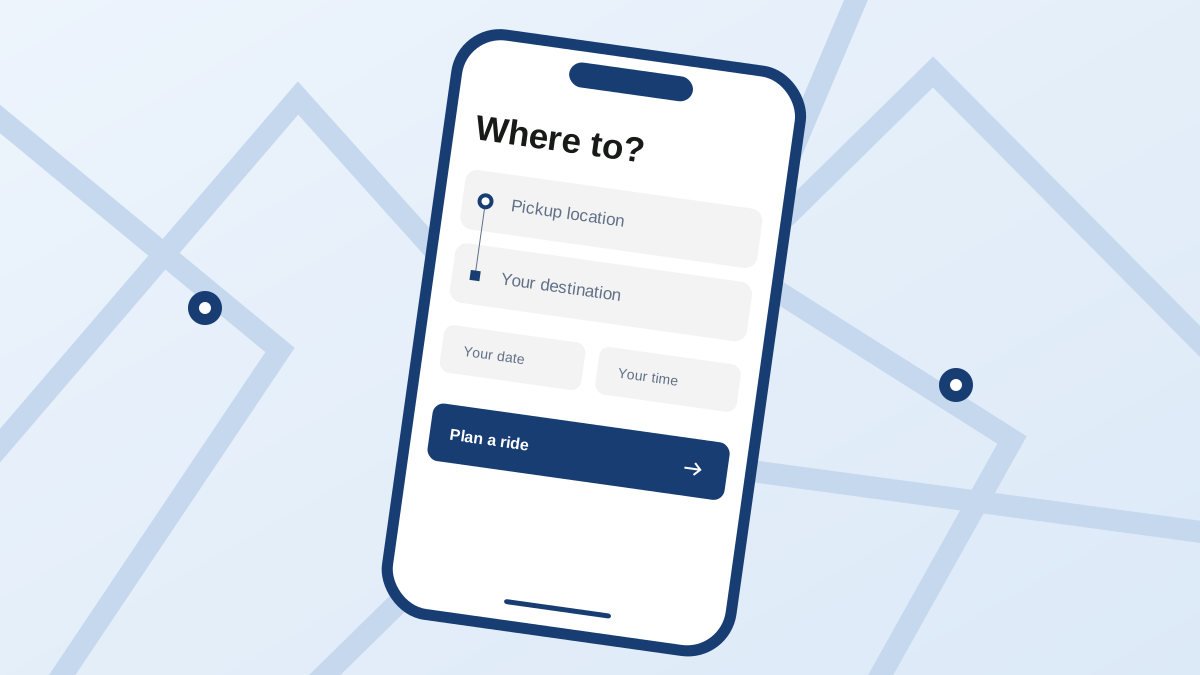
In the booking form, the passenger count helps select the applicable vehicle category. It does not certify a particular child seat or its availability. Use the equipment request option so the team reviews those details before you proceed.
Ask for the actual child seat
State the child’s age and the kind of seat you require. Ask the team which seat can be supplied, whether there is a charge and who installs it. If you bring your own, confirm compatibility and how it will fit alongside the other passengers.
Avoid relying on vague phrases such as family-friendly. Keep the confirmed seat arrangement with your booking. If the right equipment cannot be supplied, the journey needs another arrangement rather than an assumption at pickup.
Describe luggage beyond the suitcase count
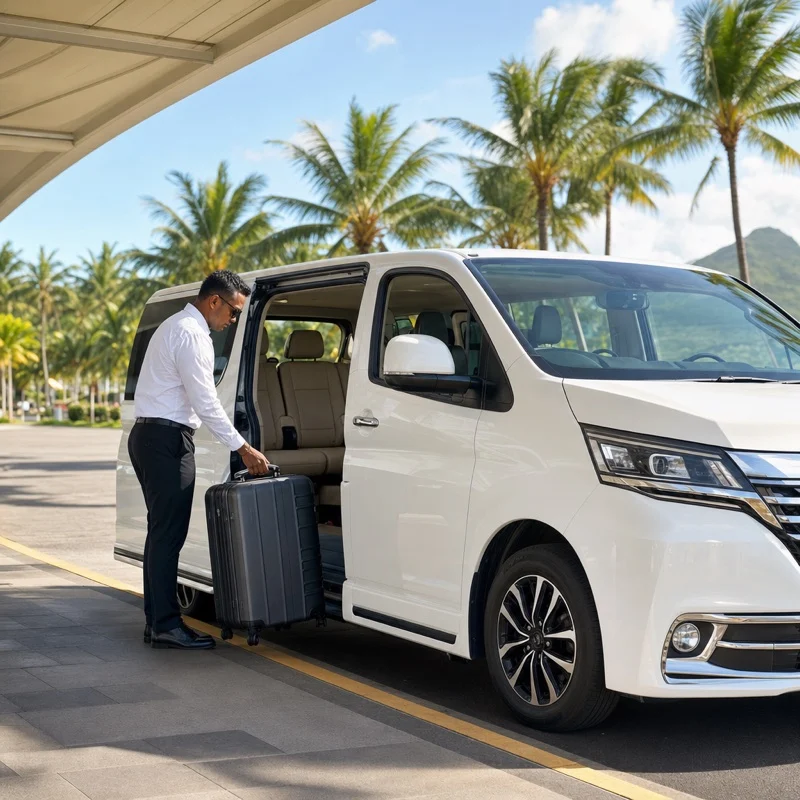
Two small cabin bags and two large hard-shell suitcases are different loads. Add a pushchair, wheelchair, golf bag, surfboard or other bulky item to the description, including whether it folds where relevant.
Tell the team whether your luggage travels on every leg. Sightseeing after checking out means the vehicle may need to carry bags all day. If more than one vehicle is proposed, agree how passengers and belongings will be divided.
- Adults, children and infants travelling
- Large suitcases and cabin bags separately
- Pushchair dimensions and whether it folds
- Sports equipment or other oversized items
- Required child seats
- Mobility equipment and boarding assistance
Confirm the boarding arrangement
If a traveller uses a wheelchair or has limited mobility, describe the practical requirement rather than choosing a vehicle from a photo. Ask whether the passenger must transfer into a seat, how the wheelchair is stored and what assistance the driver can provide.
A standard van is not automatically wheelchair accessible. A ramp, securement system, space for a passenger remaining in their wheelchair and trained assistance must each be confirmed where needed. Share only the functional details required to arrange the journey, not medical documents.
Check the details before travel
Make sure the written offer names the accepted equipment requirements, any extra charge and the pickup instructions. If the vehicle or group changes, ask for the fit to be checked again.
Taxi Mauritius routes special equipment requests to the team for review. The request receipt records that the brief was received; it is not a promise that the requested equipment has already been reserved.
Your questions, answered.
Does selecting a van guarantee enough luggage space?
No. Describe the bags and bulky items so the team can confirm the arrangement. Seat count and usable luggage space are separate constraints.
Can I request a wheelchair-accessible transfer?
You can describe the requirement in a quote request. Availability and the exact boarding, seating and securement arrangement must be confirmed before booking.
Can I bring my own child seat?
Ask the team to confirm compatibility and capacity for the planned vehicle, and agree who will install it. Bringing a seat does not by itself confirm that it fits.